

I have a corollary to suggest for ‘Truth is stranger than fiction’. Here it goes: ‘The future is stranger than expected’. Allow me to explain.
When the first electric vehicles hesitantly stepped into the market, even the most optimistic of us couldn’t grasp their full potential – the most we expected from them was to largely replace traditional vehicles.
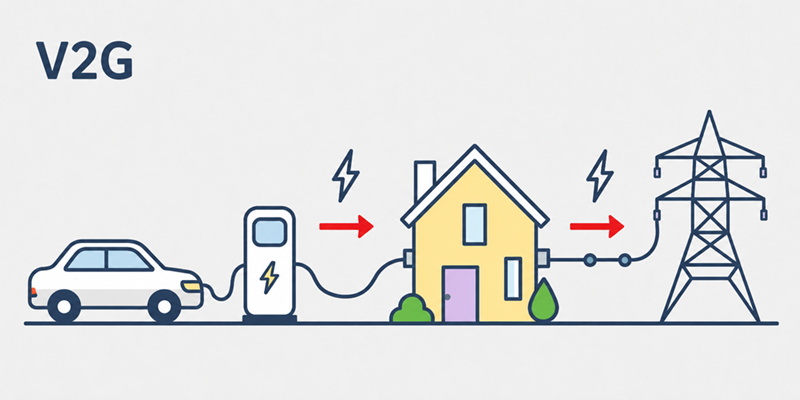
But then someone had the idea of using an electric car to power a house (V2H), and then someone went a step ahead and asked why multiple EVs can’t power a community (V2G)? Yup, stranger than expected – more exciting than expected!
Let’s talk about this in a bit more detail, followed by whether you should buy an EV, a charger, or a home battery with V2G compatibility here in Aotearoa New Zealand.
Understanding Vehicle to Grid Technology
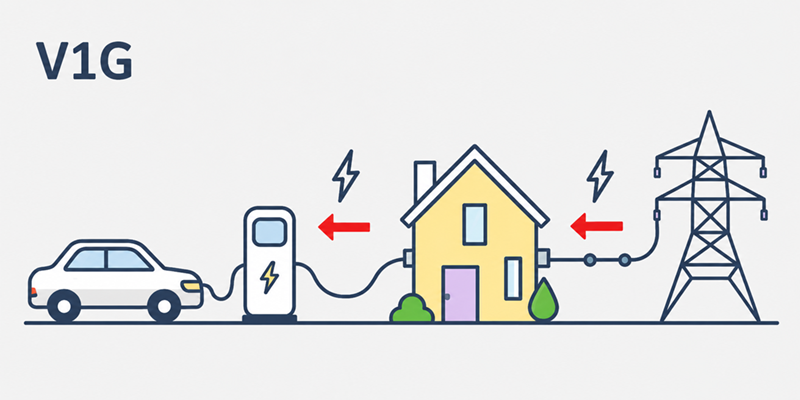
When the first electric vehicles and chargers came out, they were only V1G compatible, meaning they could only use grid power to charge the EV. Over time, V1G chargers started coming with some tricks up their sleeves, like smart charging, which allowed managing charging times to save money and avoid grid congestion.
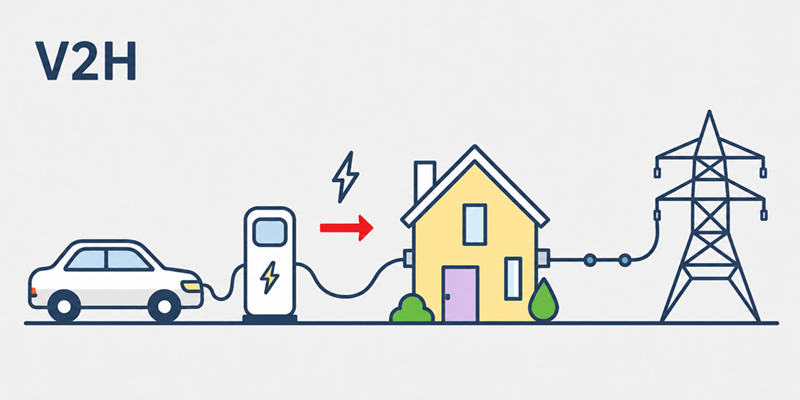
 Then came the big leap: vehicle-to-home (V2H) or vehicle-to-building (V2B), where the charger became bidirectional, meaning it could send energy from the car to your house, allowing you to increase solar self-consumption, leverage dynamic tariffs, and perhaps even save on a separate solar battery.
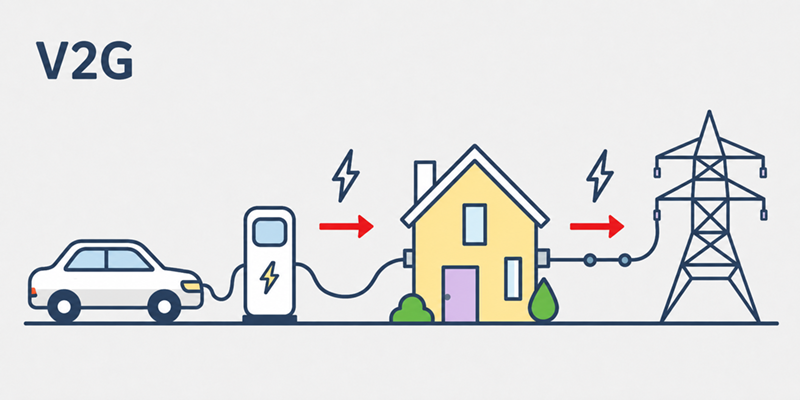
 And now, we are eyeing vehicle-to-grid (V2G) technology, where your EV can send power back into the grid. The benefits are remarkable, saving you significant amounts of money as well as stabilizing the grid, which can potentially save the grid operator millions.
V2G’s Grid Stability Benefits
V2G has gained widespread popularity even though it hasn’t become mainstream in any market yet. The reason for this is the glorious results of studies and trials. For instance, a study by RWTH Aachen, Germany, showed that EVs with V2G technology have the largest hourly energy flexibility of all technologies considered.
This means that V2G EVs can rapidly adjust electricity consumption or generation up or down on an hour-by-hour basis. This is particularly important for modern grids, where the intermittent nature of renewable sources like wind and solar poses a flexibility challenge.
Another study from San Francisco showed that V2G charging could avoid about 75% of transformer overloads by 2050 compared to uncontrolled charging.
Cost Saving Benefits of V2G
You may be wondering how V2G benefits the user. Well, the good news is that it can help save significant amounts of money and even offer revenue potential through participation in grid services such as frequency regulation and load shifting.
Firstly, when the costs of stabilising your grid go down, the cost of your energy goes down. A study on the German power grid predicted that grid-friendly V2G can reduce distribution grid investment costs by up to 6% by 2040, compared to uncontrolled and cost-optimised smart charging.
Secondly, many electric companies can offer monetary rewards for offering your EV as a distributed energy resource. In New Zealand, there are already a few companies that offer a good buy-back rate for exported home power at peak times, which you can see on our buy-back page.
That said, the current highest export price is 23 cents/KWh. Considering the average buying cost lies near 40 cents/kWh, I don’t think 23 cents is a high enough rate for you to want to export your precious EV battery storage.
It won’t be until a full value stack is offered to NZ homes, i.e., all three beneficiaries who receive your exported power need to pay up, not just the retailer. That includes Transpower and the lines company. Once all three are chipping in to pay for electrons, you might then have an offering worth considering.
Vehicle to Grid Potential in New Zealand
A New Zealand Automobile Association study, titled ‘Powerful Potential – New Zealand’s Vehicle-to-Grid Opportunity’, shows some promising results. According to the researchers, New Zealand is well-placed for V2G, with strong electricity networks, high proportion of cars parked indoors, and unified regulatory structures.
An exciting finding from the study is that EVs can offer an economic benefit of up to $2,000 per car per year for your electricity provider. Here’s a chart of their findings:
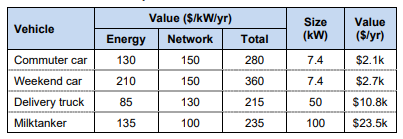 Annual savings prediction for different vehicle types (source: NZAA)
The report then goes on to say that ‘EV owners can capture a sizeable portion of this economic benefit as cost savings’. We don’t really know what ‘sizeable portion’ means right now, but it is still good news for anyone who is interested in an EV anyway.
The report also states that electrification of transport can replace imported fuels, potentially saving $2.9 billion per year by switching to locally generated electricity. Lastly, as mentioned earlier, the researchers also point out to the fact that V2G can help flatten peak demand, reducing the need for costly network upgrades.
One of my favourite graphs from the NZAA study is this one (see below), showing the potential of EV batteries to manage peak demand in 2050.
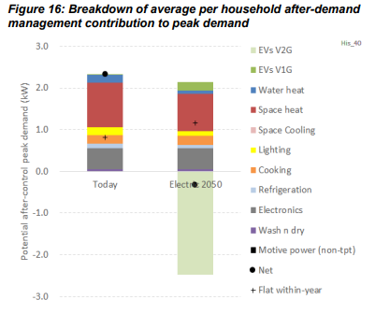
(source: NZAA)
Notice that on the upper quadrant of the graph, we have a peak demand level reaching well over 2 kW, which means every household can draw up to 2 kW of sudden, unexpected extra power. Now multiply this by hundreds of homes, and think what it does to the grid (imagine a gigantic boulder suddenly appearing on your car’s roof while driving).
On the lower quadrant, we have demand management potential, and you can see EVs offering up to 2.5 kW of demand response to each home, which comfortably avoids any grid frequency drops, in turn avoiding power cuts or equipment failures. The study compared demand management of other smart devices, and nothing came close to EVs, specifically because EVs have such humongous batteries.
For context, a typical home battery, like the Tesla Powerwall, is just around 13 kWh, but an EV battery, such as that of a Model Y, is a whopping 60+ kWh in capacity. A 60 kWh battery, in theory, can absorb a power surge of 2 kW in up to 30 homes at a time. The actual numbers will vary based on battery charging levels and some efficiency constraints, but it is quite amazing nonetheless!
Here’s another graph that shows the level of peak demand we’ll have to deal with if we do not adopt V2G:
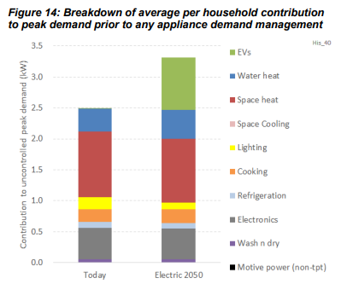
(source: NZAA)
The peak demand requirement is now close to 3.5 kW, instead of around 2 kW (from the previous graph). But the worst part is that we don’t see EVs absorbing these abrupt demand changes. And in this scenario, we will need to build numerous power stations or big battery plants to make the grid more flexible, spending millions of extra dollars.
Okay, one last fun number-play. A detailed study in Europe showed that the European Union can save €22 billion annually by 2040. Now, I know this is a very crude way to work with numbers, but if we consider that New Zealand’s population is 1% of Europe's, and that NZ may save only about 1% of the €22 billion, then we’re saving about €220 million, or over $400 million in today’s value.
If we were to make this back-of-a-napkin math more accurate, we’d have to take into account New Zealand’s mostly renewable grid, and the high significance of flexibility because of the seasonal variations in our hydro levels. This means the actual value will be much higher than the estimated $400 mn. Not bad!
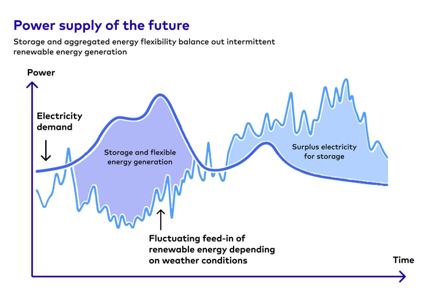
Importance of grid flexibility in NZ’s highly renewable-powered grid (source: Cortexo)
EECA’s V2G Trials in NZ
The Energy Efficiency and Conservation Authority (EECA) is running two important V2G trials in the country. The first is the Queenstown trial, in partnership with Rewiring Aotearoa and Queenstown Electrification Accelerator (QEA). The second, ‘Urban Trial’, is still in the plans.
The QEA trial page states that ‘just half of the vehicles owned by households in New Zealand could together output more capacity than all of the nation's power stations combined. Business fleets, buses, trucks, and more can add to this further. Tapping into even a small percentage of this potential could make our electricity system more affordable, efficient and resilient.’
Here’s a graph from the QEA website, showing how V2G’s power supply potential exceeds all other power stations combined.
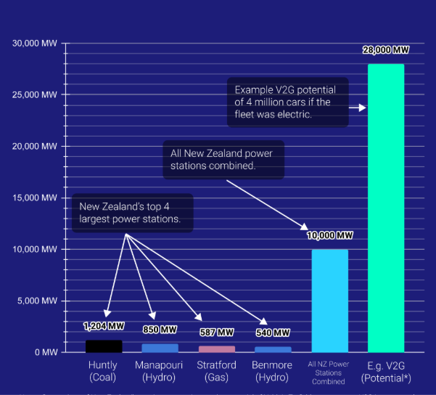
Potential of V2G in NZ (source: QEA)
I reached out to EECA to check if they had any early insights from the trials. In their response, EECA explained that the Queenstown installations are just starting, and the bulk of them will happen later this year (2026). The second, urban trial, is still in the early stages of scoping. As for the trial results, EECA said it plans to publish the first report in a few months, including details such as the level of support from vehicle manufacturers, charger availability, and more.
Challenges
For all the hype about vehicle-to-grid, the technology faces some major obstacles. For ages, we’ve found ourselves excited about some new tech and claimed that it’s the future, but ‘future’ is a vague term, with some technologies arriving in two years and some in 20.
The most important factor holding V2G back is that it needs deployment at the grid level. For most other modern technologies, such as electric cars or solar panels, the adoption started as soon as products were launched, as anyone could purchase them for themselves.
In the case of V2G, merely buying compatible equipment is insufficient. There are grid-level hardware and software changes that need to be identified and then executed, such as setting up multiparty interoperable communication protocols and regulatory frameworks. This is a herculean task, considering the fact that New Zealand’s grid, despite being that of a relatively small country, has 11,000 km of high-voltage lines and 170 substations.
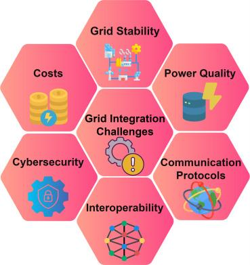 Challenges in widespread adoption of V2G (source: Science Direct)
According to the International Energy Agency, ‘Despite the standardisation of the CCS communication protocol for V2G in ISO 15118-20, interoperability between chargers and EVs is currently extremely low, as implementation of the new standard varies considerably between original equipment manufacturers (OEMs). All current commercial offerings are packages comprising specific EV models, specific chargers, and a tariff offered by a specific utility’.
The final part of the above statement is especially concerning, which says that all existing successful V2G implementations involve the utility specifying the EV models and chargers. A relatable example of this is the partnership between Amber Electric and BYD in Australia.
What this means for Kiwi homeowners is that even if you buy a V2G-compatible battery, having just any V2G-compatible charger and EV at the time of policy rollout may become an issue. Even if you have the right battery, you may end up having the wrong car or charger.
V2G Compatible Equipment Available in New Zealand
Electric Vehicles
Theoretically, V2G is simply pulling back the energy in a car battery and sending it into the grid. Considering that, a car’s hardware and software capabilities are usually not a big concern when talking about V2G.
Most modern vehicles with a CCS charger use the ISO15118-2 standard, which can be ‘forced’ to do V2G – all you need is the correct firmware upgrade to bypass the existing software’s parts that block this reverse energy flow. That said, this may pose warranty-voiding implications. However, if the car makers themselves offer such upgrades, it would be a win, and this may be possible soon.
As for the cars that natively offer V2G (without the need for the above-mentioned software bypass firmware upgrade), here’s a short list:
- Nissan Leaf 2019+
- Mitsubishi Outlander PHEV
Both the above models use the older, CHAdeMO plug, which natively supports bidirectional power flow. The Nissan Leaf, in particular, is currently the gold standard when it comes to V2G in NZ, while the Outlander doesn’t have that big of a battery to make a significant difference.
A lot of modern EVs are now built ‘future-ready’ in the context of V2G, meaning they have all the necessary internal hardware for V2G to work. Once V2G gets a green signal from the grid authorities, manufacturers can activate the capability via a simple upgrade, as mentioned previously. Below is a list of a few such cars:
- Polestar 3
- Kia EV9
- Volvo EX30
- VW ID
Chargers
- Wallbox Quasar
- Star Charge Halo 7/11 kW
- Sigenergy
The Wallbox Quasar has been the most commonly used charger with compatible Nissan Leafs in NZ’s trials so far. It is also one of the most widely used models worldwide, wherever V2G trials are in further stages.
The Star Charge Halo, interestingly, is the only option ‘recommended’ by EECA. Sigenergy, on the other hand, is lately making waves with its complete package of the 25 kW bidirectional charger and a V2G-supportive solar home battery.
Home Batteries
V2G-compatible batteries, to be honest, are not really a big thing to look out for. A home battery’s function is quite independent of the EV and charger. That said, some brands may offer an ecosystem of V2G-compatible devices that all work together to optimise charging and discharging through both the solar battery and the EV.
Currently, Sigenergy’s Sigenstor is the battery that has any software that deals with V2G. Homeowners with 2-phase property may also find Sigenstor a great option, as it supports 2-phase circuits.
Should You Buy V2G-Compatible Equipment?
If you are torn between V2G-compatible and non-compatible batteries/chargers/EVs at the moment, the right thing to do is to place less weightage on the V2G compatibility. Buy the model that suits your needs best. Let V2G be only a tie-breaker between your options.
While anyone can say with certainty that the future of V2G in NZ is bright, we don’t know how bright, and when that brightness will appear. The V2G trials are still in their infancy, and the trial results and possible policy implementations are far away.
And even if you do buy V2G-supporting equipment, there’s again the possibility that your network provider might offer a package with only prescribed V2G equipment. Overall, V2G is a tempting thing, but it still seems a bit farther in the future; and like they say, ‘there is no time like the present’, so go ahead and buy that battery or car that you really liked – V2G or not!






The enphase ecosystem has not been mentioned here - on the face it from what i have read both by the by enphase\'s whitepaper (https://enphase.com/download/iq-bidirectional-ev-charger-whitepaper) on their new Bidirectional DC charger currently been trailed in Europe now and other sources. This would seem to be Relatively easy solution for V2H anyway.