

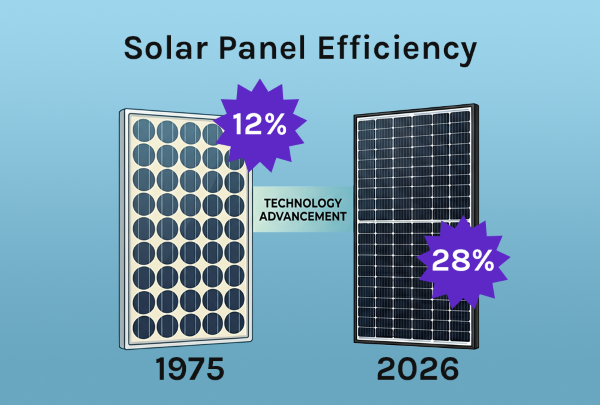
The word ‘efficiency’ lives at the centre of each engineer’s heart, whether we’re building cars or solar panels. Sure, we are also obsessed with things like power, performance, design, and umpteen other things. But nothing excites us as much as the concept of efficiency.
From an efficiency point of view, solar panels have come a long way. In the following sections, we will see how and when solar panel efficiencies soared, proportionally boosting their popularity. But before that, a little overview of what exactly we mean by solar efficiency.
Solar Efficiency
Efficiency, in general, is how much useful output you get from any device for a fixed amount of input. For solar panels or cells, this means how much electricity they can generate from a fixed amount of sunlight. More efficient solar panels will generate more energy per unit area. In other words, more efficient modules will need less space to generate the same amount of energy.
Every hour, about 1400 W of solar energy reaches every m2 of the top surface of the Earth’s atmosphere. Of this, some is lost because of dust, moisture, and occasionally clouds. But on a bright, sunny day, about 1,000 W/m2 reaches the ground. Now, if a solar panel has an efficiency of 25%, it will generate about 250 W per m2.
All right, now to the fascinating topic of how solar efficiencies have gone up and up over the years.
Solar Efficiency: Then and Now
The Beginning
The first solar cells were, to be honest, simply interesting lab projects with poor real-world feasibility. For instance, the first solar cell, built by scientists at Bell Labs, clocked in at just 4% efficiency. Of course, it was still a Herculean feat to create something that turned light into electricity: the ultimate currency of energy.
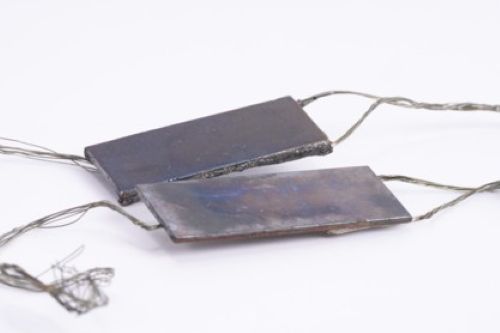
The first solar cells were created at Bell Labs (source: Museum of Solar Energy)
But 4% was too low for everyday applications. With that sort of efficiency, no residential roof would have been enough for a solar power system to power the whole home (not to mention the ridiculous costs of solar at the time).
The First Big Leap
You would think that Bell Labs, the pioneer, the first mover, would capitalize on its invention and rapidly develop more efficient cells. But it was Les Hoffman, the owner of a relatively smaller company named Hoffman Electronics, who took an enormous interest in solar cells and gradually improved the efficiency to 14% by 1960. This was such a big leap that nobody claimed a higher efficiency for another two decades.
A Global Pursuit
By the eighties, countless scientists and institutions were working hard on making solar commercially feasible, having realised its limitless potential. In 1985, the University of South Wales broke the 20% barrier for silicon solar cells, ushering in a new chapter of solar.
Within a decade, the National Renewable Energy Laboratory (NREL) had developed an alternative solar cell, using gallium arsenide and gallium indium phosphide, achieving the near-impossible 30% efficiency. But these materials were still too complicated for mass manufacturing, and the world was still looking at silicon.
At the turn of the millennium, mass manufacturing of silicon solar cells had already begun, and the efficiency war was just starting. Soon, the world of solar witnessed a constant barrage of new developments and greater efficiency numbers.
>20% Becomes the New Standard
In 2011, SunPower was awarded the Guinness World Record for offering ‘the most efficient commercially available photovoltaic modules on the market.’ The panel in question had a 20.7% efficiency.
Note that solar ‘panel’ efficiency is lower than the cell efficiency, because the frame and other surface areas of a panel that are not covered with solar cells reduce the efficiency. For instance, the solar cells used in the above-mentioned SunPower panel had a 22.4% efficiency.
It has been about 15 years since this record, and nearly every commercial panel today claims an efficiency above 20%. Take a look at our list of solar panels that are currently available in Aotearoa, New Zealand. You will notice that most panels have efficiencies around or above the 22% mark.
2026 – The Year of 28%
In April 2026, Longi Solar, one of the biggest solar cell and panel manufacturers, announced that it had achieved a record 28.13% solar cell efficiency (silicon only). Using this cell, Longi promises a panel efficiency of 26.4%, something very rare in commercially available panels today.
Around the same time, Trina Solar, another industry giant, announced a new back-contact cell with 28% efficiency. Interestingly, this marked the 39th time Trina Solar broke a cell-efficiency record. That’s certainly not something many other companies can claim!
As it normally goes in the solar industry, it won’t be surprising if a few more manufacturers announce their own new cells breaking the 28% barrier this year. Overall, this looks like an exciting time for solar cell advancement.
Lab-Based Solar Gallops Ahead
While actual manufacturers are engaged in a cut-throat race of efficiencies that barely cross the 28% mark, solar laboratories are in a league of their own. Way back in 1989, aerospace company Boeing developed a solar cell with 37% efficiency.
In 2006, once again Boeing ruled the news – its subsidiary Spectrolab broke the coveted 40% barrier. Fast forward to 2022, and Germany’s Fraunhofer Institute for Solar Energy achieved a (gasp!) 47.6% efficiency – the current record!
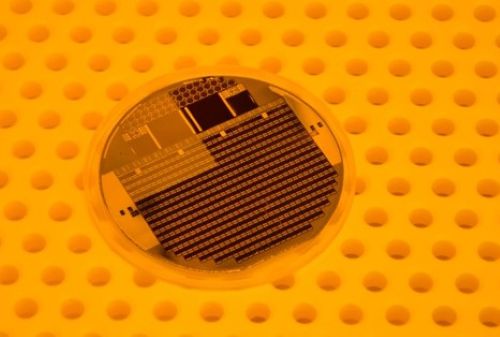
Fraunhofer’s 4-junction solar cell with 47.6% efficiency (source: Fraunhofer Institute)
As is the case in any industry, laboratory achievements are much further in the solar industry than the commercially viable achievements. One of the key reasons for this is the fact that labs don’t have to think about warranties, durability, etc. A solar panel installed on a house or the ground is supposed to operate for 25 or more years, facing harsh sunlight, rain, winds, bird droppings, and whatnot! And companies must take that into account.
Nevertheless, lab-based achievements usually pave the way for commercial designs, and that’s a win for all of us.
Final Words
‘Growth’ is one word that can encompass what humans do technologically, and the story is no different in the solar industry. We have come a long way from single-digit solar cell/panel efficiencies to nearly reaching the 30% mark. In closing, below is a graph by the National Laboratory of the Rockies (a division of the U.S. Dept. of Energy). It shows how the efficiencies of numerous solar cell types have changed over the years.
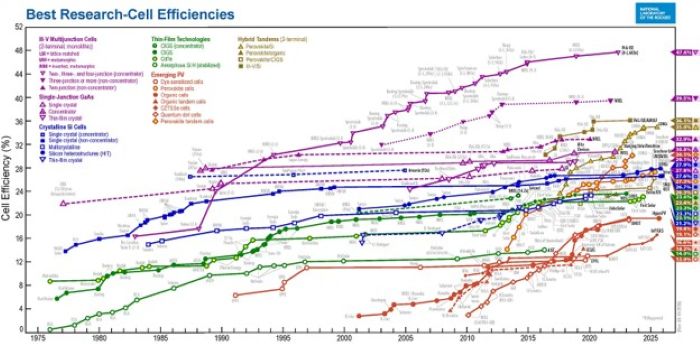
Solar cell efficiencies over the years (source: NLR)
Yes, the graph looks busy and hard to read, but just look at the general trajectory of each line. Notice that each line has climbed up significantly, from 1975 to 2025. Take the blue line with solid squares, for instance. It shows the efficiencies of monocrystalline silicon, the most commonly used panels worldwide. In 1975, the record efficiency for this tech was just above 12%. In 2025, it was 27.6%. And as we read a while ago, it has officially crossed 28% in 2026.
All the other solar technologies show a more or less similar trend. It would be silly to assume that the speed of change will remain the same. We will probably hit a plateau somewhere in the near future, and the slopes of most graph lines above indicate that. Nevertheless, the future (and the present!) of solar looks brighter than ever!






Totally agree Kristy . Contacts rebate is low but like you we have a battery set up and exporting power was not used as a decision “to install “, reason . Our decision making was based firstly on resilience around outages ( hence the battery ), and reducing our power bill . Oddly , but great that there have been no significant outages since installation .